Myopia Management Clinic

Myopia Control Could Save Your Child From Future Vision Problems
Myopia (nearsightedness) is one of the fastest-growing health conditions affecting children in Canada and around the world. Roughly 30% of Canadians are currently myopic and global prevalence is projected to affect 50% of the world’s population by 2050. Left unmanaged, myopia doesn’t simply mean stronger glasses every year. High myopia significantly increases the lifetime risk of serious eye conditions including retinal detachment, glaucoma, cataracts, and macular degeneration.
The good news: when identified early, myopia progression can be meaningfully slowed. Abbey Eye Care’s Myopia Control Clinic offers a dedicated, evidence-based management program designed to protect your child’s vision for the long term. Drs. Tina and Jeff Goodhew & associates are recognized experts in myopia management, actively engaged with colleagues across North America, and bring leading-edge treatments to their Oakville patients every day.
Not sure whether your child is at risk? Use our Myopia Risk Calculator below — or book a myopia assessment to speak with our team directly.

Could Your Child Already Be At Risk? Understanding Pre-Myopia
Many children show early warning signs of myopia before their prescription ever turns negative, a stage known as pre-myopia. A child who is less farsighted than expected for their age, or who has a strong family history of myopia, may already be on a trajectory toward nearsightedness. Identifying pre-myopia early gives us the opportunity to intervene before significant prescription change occurs.
If your child hasn’t been diagnosed with myopia but you have concerns, a myopia assessment at Abbey Eye Care includes the measurements needed to identify early risk and discuss prevention strategies tailored to your child.
How is Myopia Progression Slowed?
Researchers have identified two primary strategies for slowing myopia progression in children. The first is optical: using specially designed contact lenses or glasses to alter how light focuses from the periphery of the visual field, signalling the eye to reduce its growth rate. The second is pharmaceutical: low-dose prescription eye drops (atropine) that directly slow axial eye growth.
It is the physical lengthening of the eye known as axial elongation that drives myopia progression. All myopia control treatments work by targeting this process. Learn why the eye grows and what drives myopia.

Myopia Control Treatments
01 MiSight & Abiliti Daily Disposable Contact Lenses for Myopia Control
HEALTH CANADA & FDA APPROVED
MiSight by CooperVision and Abiliti by Johnson & Johnson are novel soft daily disposable contact lenses worn throughout the day (no overnight wear).These lenses have customized optical profiles to alter the focus of light from the periphery, slowing myopia progression by about 60%.
~60% progression reductionThese daily disposable lenses are extremely safe with a very low risk of infection and contamination, especially for kids as they don’t need to be disinfected and are not being reused.
02 Ortho-K Overnight Hard Lenses for Myopia Control
HEALTH CANADA & FDA APPROVED
A hard contact lens is inserted at night time just before bed and removed immediately upon awakening. This gently reshapes the surface of the eye, taking the child’s prescription to zero, allowing them to go about their daily activities without glasses or contact lenses.
~50-70% progression reduction03 Myopia Control Glasses (MiSight Spectacle, Stellest 2.0*, MyoCare, MiyoSmart IQ)
HEALTH CANADA & FDA APPROVED*
Specially designed spectacle lenses alter the focus of light from the periphery. New developments in this area now allow for prescription control similar to contact lenses or eye drops and provide control in the range of 60-70%.
~60-70% progression reduction04 Atropine Eye Drops for Myopia Control
OFF LABEL
Atropine has been used in eye care for over 100 years to help eye doctors view inside the eye and treat certain eye conditions. For myopia control, researchers have discovered that atropine can slow prescription change by about 50%. Drops are taken once per day at night before bed. Learn more about Ortho-K for kids.
~50% progression reductionThese drops are often used in addition to glasses or contact lenses when more myopia controlling effect is required. Learn more about atropine for myopia control here. Atropine drops for myopia control are compounded (manufactured) by specialized pharmacies.
05 Red Light Therapy for Myopia: A Treatment We’re Watching
EMERGING
Repeated Low-Level Red Light (RLRL) therapy is an
exciting emerging treatment for myopia control that has shown significant promise in clinical research, particularly in children. The therapy involves brief daily sessions using a purpose-built device that delivers low-intensity red light into the eye, which is thought to slow the axial eye growth that drives myopia progression.
RLRL therapy is currently approved and in use in
several countries including Australia and parts of Asia, but has not yet received approval for use in Canada. We are closely monitoring its regulatory status and the evolving evidence base, and we look forward to offering it to our patients if and when it becomes available here.
Calculate Your Child’s Risk of Myopia
Myopia Control Flipbook
Myopia Control Clinic Services: What Sets Us Apart
At Abbey Eye Care, our Myopia Control Clinic goes beyond prescribing lenses, we provide a comprehensive, monitored management program backed by the latest evidence-based research.
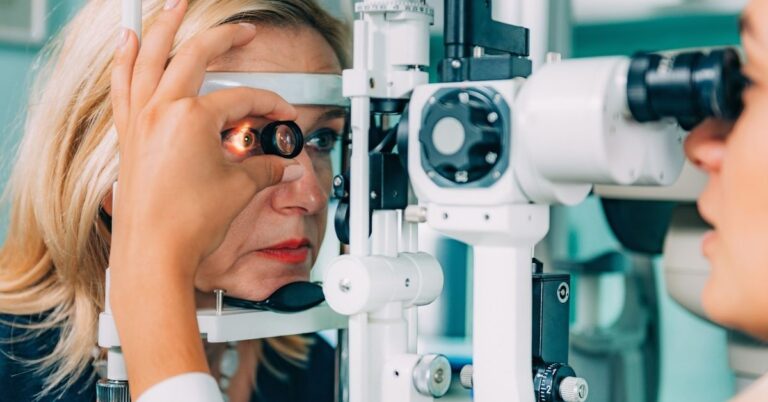
Advanced Diagnostic Technology: We are one of a limited number of optometry clinics in Ontario with a Nidek AL-Scan, which precisely measures the axial length of your child’s eye (the physical length from front to back). Axial length is the gold standard for tracking myopia progression, if the eye is growing we are able to detect it early. We pair this with corneal topography, which maps the curvature of the cornea in detail and is essential for Ortho-K fitting and treatment monitoring.
Personalized Treatment Planning: No two children progress the same way. Our team reviews each child’s prescription history, axial length data, risk factors, and lifestyle before recommending the most effective treatment or combination of treatments.
Ongoing Monitoring: Every myopia control patient is followed at minimum every 6 months and more frequently when needed, to assess treatment efficacy and adjust the plan as your child grows. Our goal is not just to slow progression, but to optimize your child’s long-term outcome.
We look forward to working with your family to protect the future of your child’s vision. Book a myopia assessment today.
FAQ’s
At what age should myopia control start?
Myopia control is most effective when started early, ideally as soon as myopia is diagnosed, often between ages 6 and 12. That said, treatment can still be beneficial into the teenage years. Earlier intervention generally leads to better long-term outcomes.
How do I know which treatment is right for my child?
During your myopia assessment, our doctors will review your child’s prescription, axial eye measurements, lifestyle factors, and risk profile to recommend the most appropriate treatment or combination of treatments. There is no universal “best” option and will vary from child to child.
Can myopia be reversed?
Myopia cannot be reversed, but its progression can be meaningfully slowed, often by 50–60% or more with the right treatment. The goal of myopia control is to reduce the lifetime prescription your child ends up with and lower their risk of the serious eye conditions associated with high myopia as an adult.
How much outdoor time should my child get?
Research consistently shows that 2 or more hours of outdoor time daily is protective against both the onset and progression of myopia. Natural light exposure appears to play a direct role in healthy eye development. See our blog article on natural light and myopia
Does screen time cause myopia?
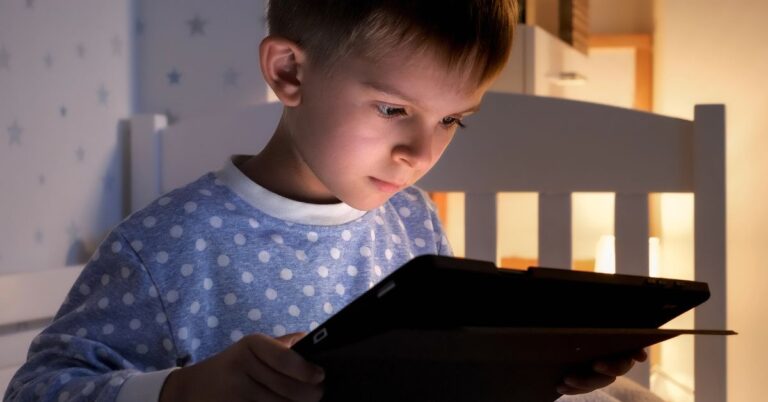
Screen time is considered a contributing risk factor, primarily due to the sustained near work involved. The evidence points to a combination of high near work load and reduced outdoor time as the key environmental drivers of myopia in children.
Is myopia control covered by insurance?
Coverage varies by plan. Many extended health benefit plans cover a portion of contact lenses, spectacle lenses and eye examinations. Our team is happy to walk you through the costs at your appointment and help you understand what your plan may include.
Explore our Myopia Resources
- Article #1: Why Your Child’s Prescription Keeps Changing
- Article #2: Screen Time & Your Child’s Eyes: What the Research Says
- Article #3: Myopia Control Glasses: Stellest 2.0 & MiSight Spectacle Lenses
- Article #4: Outdoor Play & Myopia Prevention: The 2-Hour Rule
- Article #5: Red Light Therapy for Myopia: A Promising Treatment Under the Microscope
BOOK YOUR CHILD’S EYE EXAM
Wondering whether your child’s vision has changed, or whether they might benefit from a myopia management plan? Our team at Abbey Eye Care in Oakville stays at the forefront of pediatric eye care and myopia management, and we’d love to help your family see the bigger picture. Book an eye exam today and let’s make sure their eyes are growing in the right direction.
OUR MYOPIA CLINIC
Worried about your child’s prescription climbing year after year? Our dedicated Myopia Clinic
offers proven management options which include: Spectacle lenses, Ortho-K, specialty soft contact lenses, and atropine therapy, all designed to slow myopia progression and protect the long-term eye health of you child.