Does Screen Time Cause Myopia? What Parents Need to Know
Dr. Tina Goodhew
May 24, 2026
If your child is spending more time on screens than ever before and you’ve found yourself wondering whether that’s hurting their eyes, you’re not alone. In the years since the pandemic, childhood myopia rates have climbed sharply around the world, including here in Canada and worried parents are asking the same question: is the smart phone to blame, is the iPad to blame? The answer, as with most things in medicine, a little more nuanced than a simple yes or no.
What the Science Says About Screens and Myopia Risk
Myopia commonly called nearsightedness, occurs when the eye grows too long, causing distant objects to appear blurry. It’s not just a minor inconvenience: high myopia is associated with an increased lifetime risk of serious eye conditions like retinal detachment, glaucoma, and macular degeneration. Understanding what drives it matters enormously for long-term eye health.
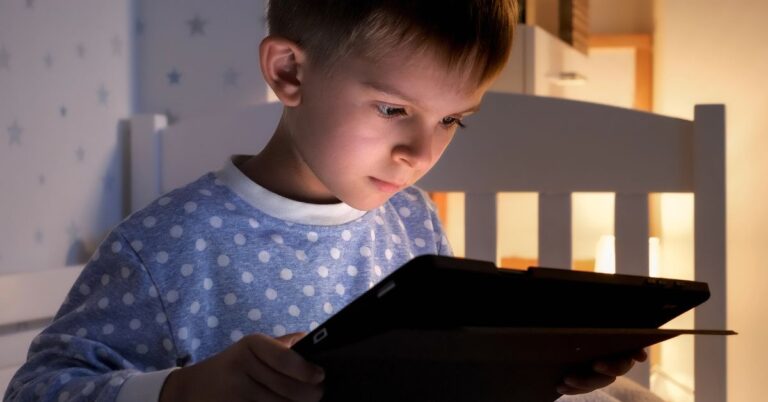
The current scientific consensus is that screen use is likely a contributing factor to myopia risk but not necessarily a direct one. What the research consistently points to is a combination of prolonged near work (use of high contrast screens, reading, close-up activities of any kind) and reduced time spent outdoors. Studies published in journals like Ophthalmology and JAMA Pediatrics have found that children who spend less time outside are significantly more likely to develop myopia and progress more quickly, independent of how much screen time they log. That said, heavy screen use often displaces outdoor play, making the two factors deeply intertwined in practice.
Close Work
Sustained focus on close objects such as screens, books and devices is associated with increased stimulus for the eye to elongate, the underlying change that causes myopia.
Pandemic Effect
School closures, reduced outdoor time, and a surge in device use from 2020 onward which coincided with a notable acceleration in childhood myopia globally.
Genetics
Children with one myopic parent have roughly a 3× greater risk of developing myopia themselves. Environment matters, but genetics set the stage.
The 20-20-20 Rule and the Elbow Rule Simple Habits That Help
You don’t need a complicated protocol to make a real difference. Two simple rules, consistently applied, can meaningfully reduce the eye strain and near-work load that contribute to myopia progression.
The 20-20-20 rule is one of the most well-known guidelines in eye care: every 20 minutes of screen or near work, look at something at least 20 feet away for at least 20 seconds. This gives the focusing muscles inside the eye a brief but meaningful rest. Setting a timer on a phone or using a visual reminder can make this easier for kids and adults alike.
The elbow rule addresses distance: screens and books should be held no closer than the length of a child’s forearm — roughly from elbow to knuckle. Many children naturally drift closer as they concentrate, so a gentle, regular reminder helps build the habit. Closer viewing distances are associated with greater near-work demand on the eye.
“The goal isn’t to eliminate screens, it’s to change how we use them. Distance, breaks, and outdoor balance are the three habits that move the needle most.” Dr. Tina Goodhew
Age-by-Age Screen Time Guidelines for Eye Health
The Canadian Association of Optometrists recommends the following screen time guidelines:
- 0–2 years: No screen time; supervised video chatting with family and friends is the one exception.
- 2–5 years: No more than 1 hour per day; content should be age-appropriate and educational.
- 5–17 years: No more than 2 hours per day of recreational screen time (outside of school work)
Why Outdoor Time May Matter More Than Screen Limits
Of all the lifestyle factors linked to myopia prevention, the one with the most consistent evidence behind it is time spent outdoors, ideally at least 90 minutes to two hours per day for school-age children. Here’s why this matters so much, and what you can do to make it easier:
- Natural light triggers protective signals. Bright outdoor light stimulates dopamine release in the retina, which is thought to slow the eye elongation process that drives myopia. Indoor lighting, even bright indoor lighting, doesn’t produce the same effect.
- Distance viewing relaxes the eye. Outdoors, children naturally look at objects far away, like the sky, trees, a ball in flight all which gives the eyes focusing system regular rest that screens and books cannot provide.
- It’s about displacement, not just addition. Encouraging outdoor play naturally reduces sedentary near work time. You don’t need a perfect schedule, even broken-up outdoor time across the day adds up.
- The 20-20-20 rule works even better outside. Combining screen breaks with a few minutes outdoors (rather than just glancing at the wall) gives the eye the light exposure and distance viewing that offer the greatest benefit.
- After-school routines make a big difference. Research suggests that children who go outside after school, before screen time, show better outcomes. Consider making outdoor time a “before homework” non-negotiable rather than an afterthought.
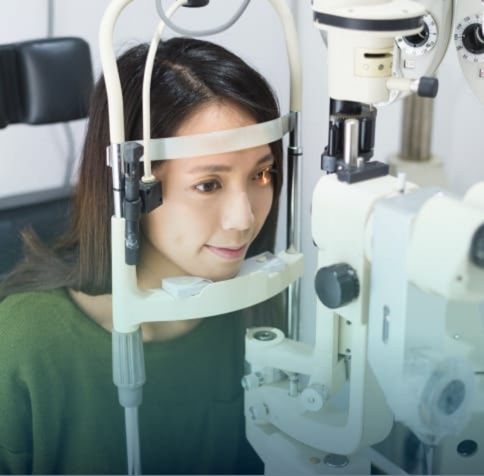
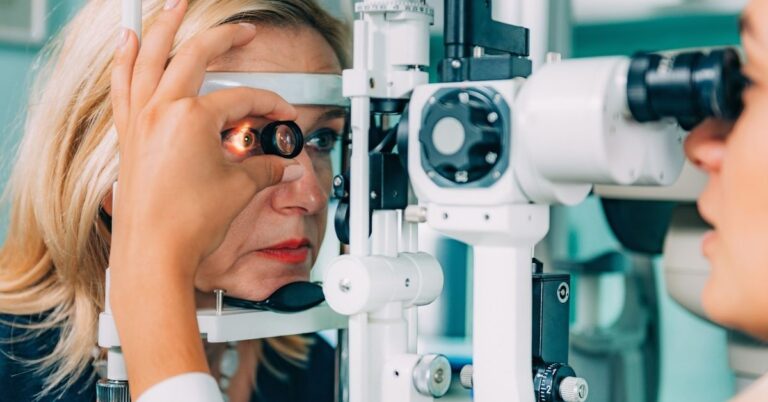
- Don’t wait for symptoms. Myopia often progresses silently in children who don’t notice or report blur. Annual eye exams allow your Optometrist to catch early changes and recommend myopia management strategies before progression accelerates.
The good news is that when families focus on building healthy outdoor habits alongside reasonable screen time, the protective effect can be significant.
FAQ’s
My child was just diagnosed with myopia. Did too much screen time cause it?
Screen time is one possible contributing factor, but myopia is influenced by genetics, overall near-work load, and outdoor time, not screens alone. If one or both parents are myopic, your child’s risk was elevated from birth. What’s most helpful now is not looking backward but being proactive: discussing myopia management options with your Optometrist to slow any further progression.
Is the 20-20-20 rule backed by evidence?
The 20-20-20 rule is widely recommended by Optometrists and Ophthalmologists as a practical way to reduce focussing fatigue, the eye strain caused by sustained near focus. While large-scale clinical trials on the rule specifically are limited, the underlying science (that regular distance viewing rests the focusing system) is well established, and the habit carries no downside.
Are some screens worse than others for children’s eyes?
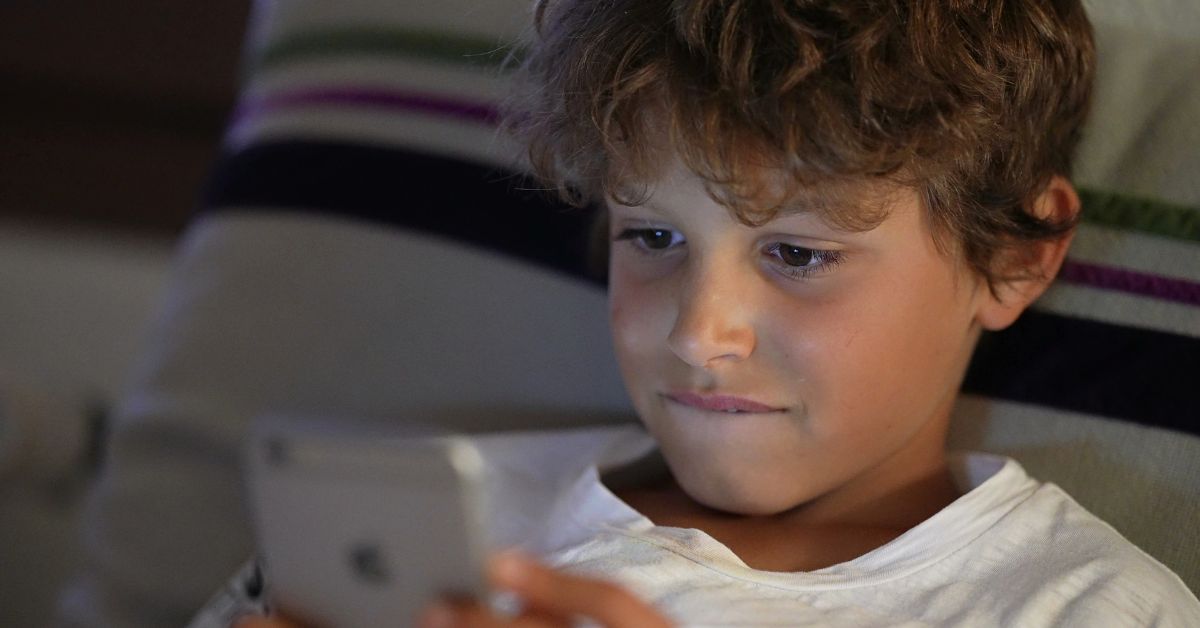
The screen type itself matters less than how it’s used. Small screens (phones) tend to be held closer, which increases near work demand compared to a TV watched from across the room. Blue light from screens has received a lot of attention, but current evidence does not strongly support blue light as a driver of myopia, the more significant factors remain viewing distance, duration, and time spent not looking at something far away.
At what age should my child have their first eye exam?
In Ontario, the first comprehensive eye exam is recommended at age 6 months, with annual exams starting at age 3. Early exams can identify issues with visual development, eye alignment, and early refractive changes, often before a child is old enough to notice or report a problem. In Ontario children under 19 are covered for an annual exam under OHIP (ultra-wide-field retinal imaging is extra).
BOOK YOUR CHILD’S EYE EXAM
Wondering whether your child’s vision has changed, or whether they might benefit from a myopia management plan? Our team at Abbey Eye Care in Oakville stays at the forefront of pediatric eye care and myopia management, and we’d love to help your family see the bigger picture. Book an eye exam today and let’s make sure their eyes are growing in the right direction.
OUR MYOPIA CLINIC
Worried about your child’s prescription climbing year after year? Our dedicated Myopia Clinic
offers proven management options which include: Spectacle lenses, Ortho-K, specialty soft contact lenses, and atropine therapy, all designed to slow myopia progression and protect the long-term eye health of you child.