Neurolens at Abbey Eye Care

The Complete Guide to Therapeutic Prism Lenses for Eye Misalignment
If you’ve been living with chronic headaches, eye strain, neck and shoulder tension, or dry eyes that never seem to fully respond to treatment, the cause may not be what you’d expect. For many people, these symptoms trace back to a subtle misalignment between the eyes, one that standard eye exams don’t always detect and ordinary glasses, until now, have never been able to fully correct.
At Abbey Eye Care in Oakville, we’re proud to offer Neurolens, the world’s first and only prescription lenses with contoured prism technology, designed specifically to correct eye misalignment and relieve the symptoms it causes. Ninety percent of patients who wear Neurolenses experience meaningful symptom relief, and peer-reviewed clinical research has shown headache reduction comparable to taking medication without the side effects.
This guide explains how Neurolens works, who it’s designed for, what the clinical evidence shows, and exactly what to expect when you visit Abbey Eye Care for a Neurolens assessment.

What Is Neurolens? Understanding Therapeutic Prism Lenses
Neurolens is a novel therapeutic eyeglass lens that corrects eye misalignment using a patented technology called contoured prism. Unlike standard corrective lenses, which address how clearly you see, Neurolens addresses how well your two eyes work together. When your eyes are even slightly misaligned, your visual system has to work extra hard to bring them into alignment and that ongoing effort can produce a range of physical symptoms.
Neurolens is available in three designs — single vision (distance or reading), office (ideal for heavy computer users), and progressive (no line multifocal) so it works for patients of all ages, whether you’re a student, a professional who spends hours at a screen, or someone who wears reading glasses or progressive lenses.
How Eye Misalignment Often Causes Everyday Symptoms
Working together, your eyes need to point at exactly the same spot in space to produce a single, clear image. When they don’t align correctly, the muscles around your eyes have to compensate by constantly contracting and adjusting to prevent double vision. Most people never see double because their eye muscles are strong enough to maintain alignment, but that constant effort, over time, comes at a cost.
That cost shows up as symptoms you might never connect to your eyes:
- Chronic headaches that build throughout the day, especially after screen use
- Eye strain and fatigue that persists even with an up-to-date prescription
- Neck and shoulder tension that doesn’t respond fully to massage or physiotherapy
- Dry eye sensation that isn’t completely relieved by drops or other dry eye therapies
- Light sensitivity indoors, particularly under fluorescent or LED lighting
- Motion sickness or dizziness triggered by a busy visual environment i.e. trying to read in a moving vehicle
If any of these sound familiar, especially if you’ve tried other treatments without complete relief, eye misalignment may be the culprit.
The Trigeminal Nerve Connection — Why Misalignment Triggers Headaches and Pain
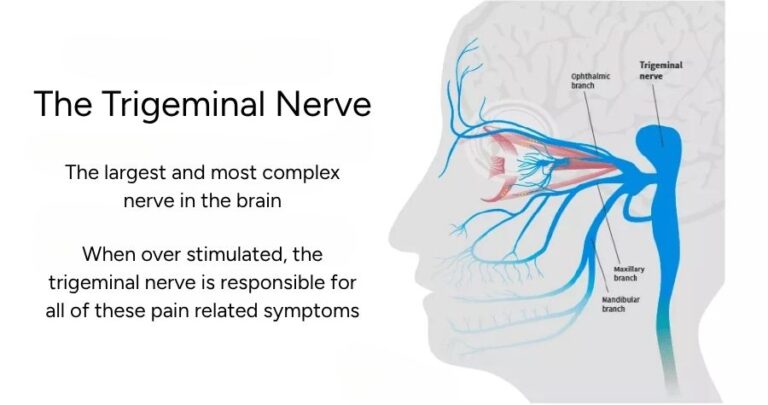
The link between your eyes and symptoms like headaches, neck pain, and light sensitivity runs through the trigeminal nerve which a cranial nerve in your body and the primary sensory nerve for your face, head, and upper neck. When your eye muscles are under constant strain to maintain alignment (prevent double vision), the resulting tension stimulates the trigeminal nerve, which can radiate pain to the head, temples, forehead, neck, and shoulders.
This pattern is sometimes called trigeminal dysphoria. It helps explain why patients with eye misalignment often describe symptoms that feel muscular or neurological rather than visual and why treatments focused on the muscles alone (like massage or chiropractic care) may provide temporary relief without resolving the underlying cause.
How Contoured Prism Technology Works
Prism lenses aren’t new — optometrists have prescribed standard prism for decades to help redirect light and reduce the effort your eyes need to align properly. The challenge with standard prism is that it applies the same amount of correction across the entire lens, regardless of where you’re looking. This is a problem because your eyes need different amounts of prism correction depending on whether you’re looking at something in the distance, at your laptop, or at your phone.
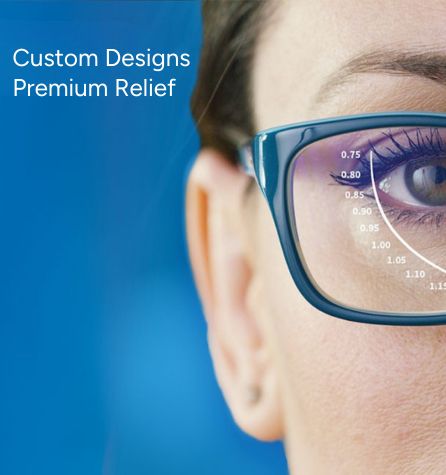
Neurolens’s novel contoured prism technology solves this with a variable design: the base-in prism dynamically increases from the top of the lens to the bottom. When you look straight ahead at a distance, you receive a smaller amount of prism. As you look down towards a screen and your eyes need to turn inwards (converge) the prism increases to match. The result is seamless eye alignment support at every viewing distance, all in a single lens.
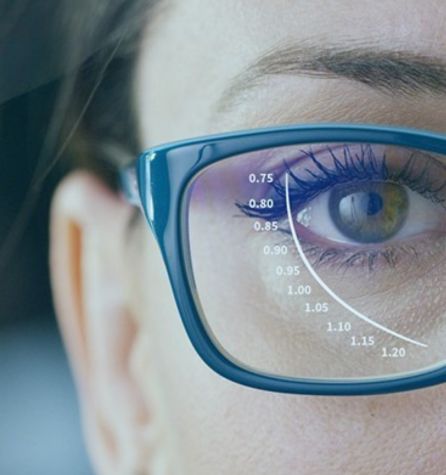
Contoured Prism vs. Standard Prism. What Makes Neurolens Different?
Feature | Standard Prism | Neurolens Contoured Prism |
|---|---|---|
Prism distribution | Uniform across the entire lens | Graduated – increases from top to bottom |
Distance correction | Same as near correction | Independently calibrated for distance |
Near correction | Often underprescribed to avoid over-correction at distance | Full correction where convergence demand is highest |
Risk of prism creep | Yes, patients may need increasing prism over time | No, contoured design eliminates prism creep |
Measurement precision | Manual limited accuracy | VR headset with 10,000+ data points, accurate to 0.10 PD |
This graduated approach means your Abbey Eye Care Optometrist can prescribe the right amount of prism support at every distance without the compromises found in standard prism lenses. For our patients,this translates to more natural, comfortable vision throughout the day.
Symptoms Neurolens Can Help With
Neurolens is designed for our patients experiencing symptoms related to eye misalignment. Below is a closer look at each of the primary symptoms and how misalignment contributes to them.
Chronic Headaches and Migraines
Headaches are the most common reason patients seek a Neurolens evaluation. When eye muscles strain to maintain alignment, the resulting trigeminal nerve stimulation can produce tension-type headaches, forehead pressure, and pain around the temples. In a clinical study of 186 chronic daily headache sufferers, 81.6% reported a positive response after 90 days of wearing Neurolenses, as measured by the Headache Impact Test (HIT-6). A separate randomized, double-masked crossover trial published in Translational Vision Science & Technology demonstrated headache relief comparable to prescription medication without the side effects.
Digital Eye Strain and Screen Fatigue
Heavy screen use demands sustained convergenc, meaning your eyes have to turn inward and hold that position for hours. For someone with even a slight misalignment, the additional muscular effort compounds over the course of a workday, leading to eye fatigue, blurred vision, and difficulty concentrating. Neurolens reduces the effort required by providing graduated alignment support that increases as your eyes converge toward the screen. For many patients, this means the difference between comfortable, productive screen time and the end-of-day exhaustion they’ve come to accept as normal.
Neck and Shoulder Pain Related to Vision
Persistent neck and shoulder tension is one of the less obvious symptoms of eye misalignment and one of the most commonly overlooked. When your eyes struggle to align, you may unconsciously tilt or turn your head to find a more comfortable visual position. Over time, these compensatory postures create chronic muscle tension that massage and manual therapy can temporarily relieve but not resolve. By correcting the misalignment at its source, Neurolens helps eliminate the postural compensation that drives the pain.
Dry Eye Sensation and Light Sensitivity
The trigeminal nerve plays a role in regulating blink rate and tear production. When it’s chronically stimulated by the muscular effort of maintaining alignment, the result can be a dry, gritty sensation in the eyes even in patients whose tear film looks healthy on examination. Similarly, trigeminal irritation can heighten sensitivity to light, particularly under indoor fluorescent or LED lighting. For patients whose dry eye symptoms haven’t fully responded to drops, punctal plugs, or other treatments, Neurolens can address the underlying neural component and provide the additional relief they’ve been looking for.
The Clinical Evidence Behind Neurolens
Abbey Eye Care believes in recommending treatments that are backed by published research. Neurolens has been the subject of several clinical studies, and the evidence supports its effectiveness for patients with symptoms of eye misalignment.
The 2024 Randomized Crossover Trial:
Published in Translational Vision Science & Technology, this double-masked, randomized crossover study enrolled 195 patients across 10 practices. Patients who wore Neurolens contoured prism lenses experienced a statistically significant improvement in headache-related quality of life compared to those wearing control lenses. The study design, a crossover where each patient served as their own control, is considered one of the strongest forms of clinical evidence.
The Chronic Daily Headache Study:
This multi-site study enrolled 186 patients with chronic daily headaches. After 90 days of wearing Neurolenses, 146 of 179 completing patients (81.6%) reported a positive response on the Headache Impact Test (HIT-6), a validated clinical outcome measure. The degree of headache relief was comparable to pharmaceutical treatments, without medication side effects.
The 90% Symptom Relief Rate:
Across Neurolens’s clinical and real-world data, 90% of patients wearing Neurolenses report meaningful relief from their symptoms of eye misalignment. This applies across all symptom types (headaches, eye strain, neck pain, dry eye, and light sensitivity) and across severity levels from mild to severe.
Your Neurolens Assesment at Abbey Eye Care – What to Expect
Getting Neurolens at Abbey Eye Care is a straightforward process that starts with understanding your symptoms and ends with a pair of lenses customized to the way your eyes work together. Here’s what each step looks like.
- The Lifestyle Questionnaire:Before any measurements, you’ll complete a brief symptom questionnaire that helps us understand which symptoms you’re experiencing, how severe they are, and how they’re affecting your daily life. This screener helps us determine whether you’re a good candidate for Neurolens and gives us a baseline to measure your improvement over time.
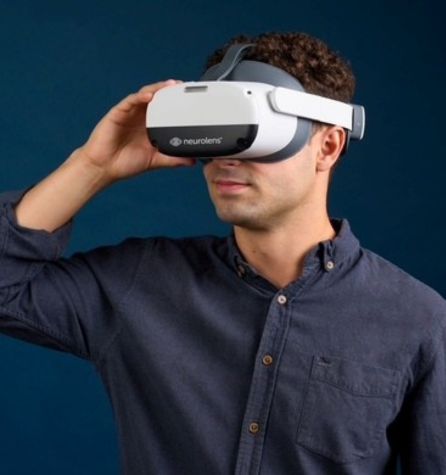
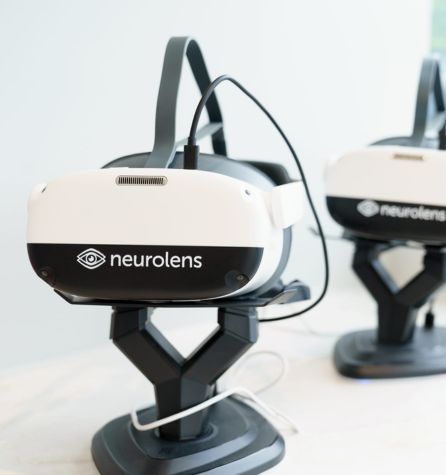
- Measurement with the N3 Device:The Neurolens N3 measurement device is the only instrument of its kind. Using eye-tracking technology in a dynamic virtual reality environment, it captures over 10,000 data points to map exactly how your eyes align at distance and at near. The measurement takes just a few minutes, is completely non-invasive, and is accurate to as little as 0.10 prism diopters — a level of precision that no manual test can match.
- Understanding Your Results: After the measurement, your optometrist will walk you through your results, including your personal Neurolens Value which is a number that represents the degree of misalignment between your eyes. We’ll explain what it means, how it relates to your symptoms, and what kind of relief you can expect.
- Your Neurolens Prescription: Based on your measurement, we’ll prescribe Neurolens in the design that suits your lifestyle — single vision for everyday use, office lenses for computer-focused work, or progressives for patients who need correction at all distances (multifocal). Your contoured prism is built directly into the lens, so there’s nothing extra to wear or adjust.
The N3 Measurement Device Over 10,000 Data Points in Minutes
The N3 device deserves its own mention because it’s a significant part of what makes the Neurolens system different from traditional prism prescribing. Standard methods for measuring alignment rely on subjective manual tests that are difficult to reproduce precisely. The N3 uses objective, algorithm-driven eye tracking to measure your alignment at both distance and near, producing a result that is repeatable and precise. After the measurement, 98% of patients say they understand their misalignment and how it connects to their symptoms. The device also includes a built-in patient education component that shows you exactly what’s happening with your eyes.
Neurolens Lens Options: Single Vision, Office, and Progressive
Neurolens isn’t a one-size-fits-all product. Your contoured prism prescription is built into whichever lens design fits your life:
- Single Vision Neurolens: For patients who need one correction for distance or near. Ideal for younger patients, contact lens wearers who want a dedicated pair of glasses for screen use, or anyone with a single-focus prescription.
- Office Neurolens: Designed for the intermediate and near distances where most screen work happens. A strong choice for professionals who spend the majority of their day at a computer and want maximum comfort in that range
- Progressive Neurolens: For patients who already wear progressive lenses and want contoured prism built into their everyday lenses. Provides alignment correction at all distances, from driving to reading all in a single seamless lens.
Your optometrist at Abbey Eye Care will recommend the design that best matches your visual demands, symptoms, and lifestyle.
Insurance, Cost, and Value
Many patients with symptoms of eye misalignment are already spending significantly on managing those symptoms. Over-the-counter pain medication for headaches, massage therapy for neck tension, chiropractic appointments, specialty eye drops for dry eye, or even prescription migraine medication. Research suggests the average patient spends over $800 per year on symptom relief. Neurolens addresses the underlying cause, which for many patients reduces or eliminates the need for ongoing symptom management.
Neurolens is eligible for reimbursement through most insurance plans (up to your beneift amount). Our team at Abbey Eye Care is happy to discuss the investment and help you understand whether Neurolens is the right choice for your particular situation.
As a reminder prescription eye wear is considered a medical expense in the eyes of CRA and this may in turn lower your tax bill at the end of the year (speak with your accounting professional for more information).
Frequently Asked Questions About Neurolens
What is the difference between Neurolens and regular prescription glasses?
Regular prescription glasses correct how clearly you see, they address refractive errors like nearsightedness, farsightedness, and astigmatism. Neurolens does something different: inaddition to correcting your vision it also corrects how well your two eyes work together by incorporating contoured prism into the lens. This prism gently redirects light so your eyes don’t have to strain to align, which relieves the headaches, eye strain, neck pain, and other symptoms caused by that strain. You can think of it this way, regular glasses help you see clearly, and Neurolens helps you see clearly and comfortably.
How do I know if I have eye misalignment?
Most people with eye misalignment don’t realize it because their eye muscles compensate well enough to prevent double vision. The signs tend to be indirect: persistent headaches (especially after screen use), eye fatigue, neck and shoulder tension, dry eyes, or light sensitivity. If you experience any of these symptoms regularly, a Neurolens measurement can determine whether misalignment is contributing. The N3 device detects misalignment as small as 0.10 prism diopters — well below what manual testing can identify.
Is the Neurolens measurement uncomfortable?
Not at all. The N3 measurement is completely non-invasive. No drops are required, no contact with your eyes, and no discomfort. You look into the device while it tracks your eye positioning using dynamic virtual reality technology. The entire measurement takes just a few minutes, and most patients find it interesting to see how their eyes coordinate in real time.
How quickly will I notice results?
Many patients notice improvement within the first week of wearing their Neurolenses. For some, relief is gradual over two to twelve weeks as the visual system adapts to the new alignment support. Your optometrist at Abbey Eye Care will set realistic expectations based on your specific measurement and symptoms, and we’ll follow up to make sure you’re progressing as expected.
Does insurance cover Neurolens?
Neurolens is eligible for reimbursement through most health insurance plans (up to your beneift amount), Flexible Spending Accounts (FSA) and Health Spending Accounts (HSA). Please note that prescription eyewear is classified as a medical expense by CRA. This may reduce your end-of-year tax bill based on the advice of your accountant. Our team can help you understand your options and make the most of your available benefits.
Can children wear Neurolens?
Yes. Neurolens is available for patients of all ages, including children and teens. Eye misalignment can affect young people just as it does adults, particularly as screen use for schoolwork and recreation continues to increase. If your child is experiencing headaches, difficulty concentrating, or eye fatigue during homework or reading, a Neurolens assessment may be worthwhile.
I already have dry eye treatment. Can Neurolens help too?
Absolutely. Neurolens and dry eye treatment address different aspects of eye comfort. If you’re already managing dry eye disease with drops, warm compresses, or other therapies but aren’t getting complete relief, eye misalignment may be contributing to your symptoms through its effect on the trigeminal nerve and blink rate. Many patients find that adding Neurolens to their existing dry eye regimen provides the additional improvement they’ve been looking for. At Abbey Eye Care, we take a comprehensive approach and will assess both factors together.
What if Neurolens doesn’t work for me?
While 90% of patients experience meaningful relief, every person is different. During your initial assessment, we’ll discuss what realistic outcomes look like based on your specific measurement. We schedule follow-up visits to monitor your progress and can adjust your prescription if needed. Our goal is to make sure you’re confident in the value of your investment before and after you receive your Neurolenses.