The Myopia Epidemic by the Numbers: Why Half the World May Be Nearsighted by 2050
Dr. Tina Goodhew
July 29, 2026
Ask any optometrist who has been in practice for twenty years and they’ll tell you the same thing: more of their young patients need glasses today than they did at the start of their career. That’s not a coincidence, it’s a global trend, and the data behind it is alarming enough that eye doctors now call a myopia epidemic.
A Number Big Enough to Change How We Think About Children’s Eyes
Myopia, the clinical term for nearsightedness, happens when the eye grows a too long from front to back, so light focuses just short of the retina instead of directly on it. Distance objects appear blurry while close-up vision stays sharp. Myopia itself is nothing new. What’s different now is how many people it affects, and how young it starts.
In March 2026, Optometry Times ran a feature calling myopia one of the most pressing public health challenges of the twenty-first century. That’s not a marketing line. It’s a summary of research that has been building for years, much of it tracing back to a widely cited 2016 study projecting just how common nearsightedness is about to become. Three numbers tell the story.
50%
Of the world by 2050
Researchers project that close to half the global population, nearly 5 billion people, could be myopic by 2050.
1 in 5
With high myopia
Roughly 1 billion of those affected are expected to have high myopia (greater than -5.00 D), the level that carries the greatest risk to long-term eye health.
2x
The rise since 2000
Global prevalence sat near a quarter of the population in 2000. It’s on track to roughly double within a single generation. Genetics cannot account for this change.
The Numbers: How Fast Childhood Myopia Is Rising
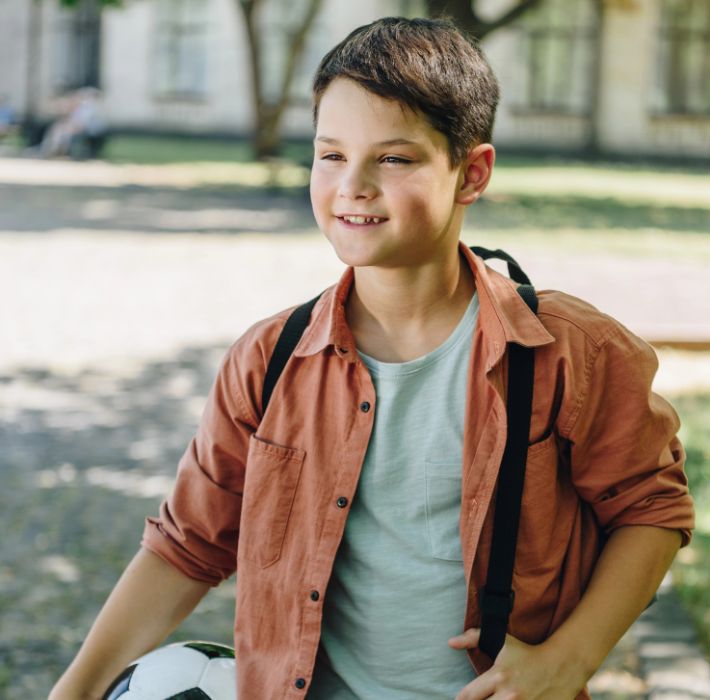
The adult projections get the headlines, but the real story is how early myopia now shows up in children. Some of the clearest data comes from East Asia, where decades of consistent study have tracked the trend closely, and the same pattern holds, in a milder form, across North America and Europe.
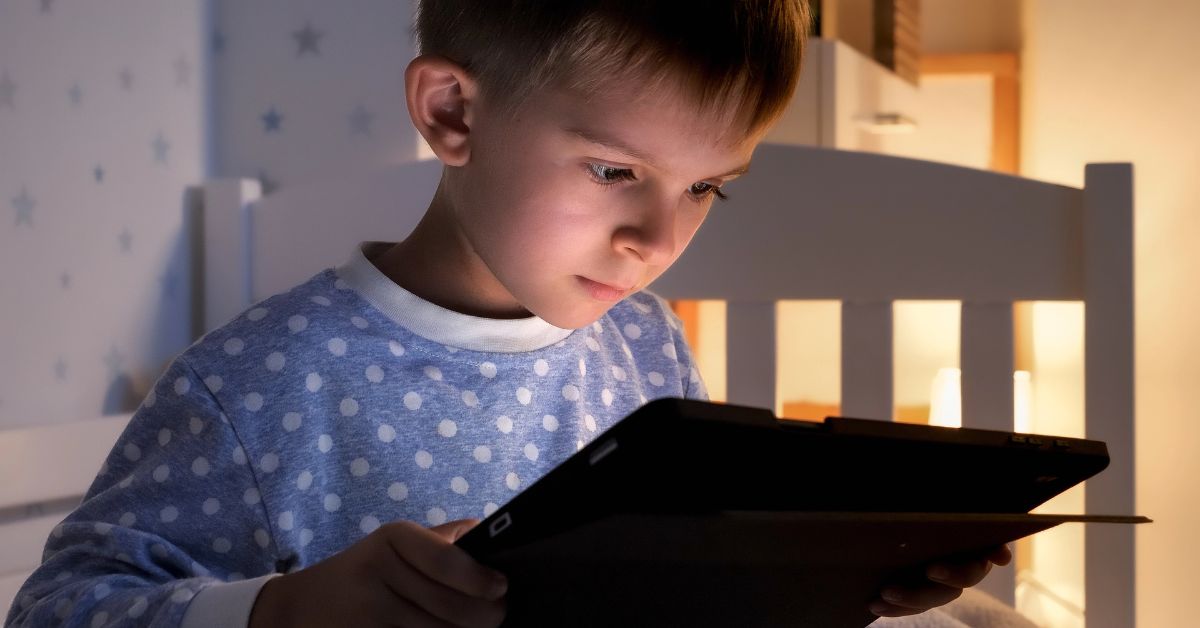
In several major East Asian countries, the majority of students now finish high school nearsighted, compared to a small minority two generations ago. North American children are following a gentler version of the same curve. Family history still plays a role, and a child with two nearsighted parents carries higher risk, but genetics shift slowly across generations. A change this fast points to how children are spending their days: more time on close-up screens and schoolwork, less time outdoors in natural light.
The age a child becomes myopic matters as much as the trend itself. The earlier it occurs, the longer their eyes have to keep growing, and the higher their prescription is likely to climb by adulthood. Catching it early isn’t just a convenience. It opens a window where treatment becomes the most effective.
For families wondering whether their own child might be on this path, we encourage them to read this blog post on how to spot risk factors for becoming myopic. As always though, nothing beats a comprehensive eye exam where we will asses your child’s risk for becoming myopic.
Why The Myopia Epidemic Matters Beyond Needing Stronger Glasses
It would be easy to read these numbers and shrug. Glasses work. Contact lenses work. People have worn corrective lenses for generations without issue. So why does a climbing prescription deserve to be called a public health concern instead of a routine annual update of your child’s glasses or contact lenses.
Because myopia isn’t only a focusing problem. As the eye grows longer, the tissue lining the back of the eye (the retina) stretches and becomes thinner. Think of what happes to a balloon when you blow it up. The higher the prescription climbs, the greater the lifetime risk of serious complications, including retinal detachment, myopic maculopathy, glaucoma, and cataracts at an earlier age.
“Every diopter of myopia that is prevented matters. Research suggests that reducing final myopia by even 1.00 D can significantly lower the risk of sight-threatening complications in adulthood.”
This is why the goal of modern myopia care has shifted. It’s no longer just about helping a child read the board clearly. It’s about slowing how far their prescription climbs, so the eye health is better protected in the future.
The Economic and Quality-of-Life Impact of Unchecked Myopia
The scale of the trend carries a real economic cost, measured in lost productivity and in the ongoing care that advanced eye disease requires over a lifetime. When a condition is on track to affect half the planet, even a modest cost per person adds up to a massive figure globally.
Closer to home, the quality-of-life impact is easier to picture. A child who can’t see the board clearly may fall behind in class or struggle on the field long before anyone traces it back to their eyes. Adults with high myopia live with thicker lenses, a greater dependence on correction, and the quiet awareness that their eyes need closer monitoring than most.
What Oakville Families Can Do Now to Change the Trajectory
Here’s the hopeful part. A global statistic isn’t something any one family can move, but a single child’s trajectory is. We now have proven ways to slow myopia progression, and some of the most effective habits don’t cost a thing. The trend describes where things are heading in general. It doesn’t have to describe your child.
- Book a comprehensive eye exam early. Children can be examined well before they’re able to read an eye chart, and the sooner myopia or its early warning signs are caught, the more options are on the table to slow it down.
- Get outside. Aim for around two hours a day. Natural daylight appears to slow the rate at which the eye grows, and it may be the simplest habit with the biggest payoff.
- Balance close work with breaks. The 20-20-20 rule is an easy one to remember: every 20 minutes, look at something 20 feet away for 20 seconds.
- Watch the distance. Encourage books, tablets, and phones to be held at a comfortable arm’s length, not pressed close to the face.
- Ask about myopia management. For children already diagnosed, options such as orthokeratology, myopia control soft contact lenses, specialized spectacle lenses, and low-dose atropine drops can meaningfully slow how fast the prescription progresses.
If your child has already been diagnosed, the next step is understanding which of these options fits them best. We walk through the details in our guides to ortho-k for children and atropine for myopia control, and show how the pieces fit together in our overview of building a myopia management plan.
FAQ’s
Is the prediction that half the world will be nearsighted by 2050 realistic?
It’s based on peer-reviewed modelling of myopia trends across global populations, and it’s widely cited across the eye care field. The exact number will vary by country, but the direction is well established. Nearsightedness is becoming more common, and it’s showing up earlier in childhood than it did a generation ago.
Why is this happening so quickly now?
Most researchers point to a shift in how children spend their time: far more hours on near work and screens, far fewer outdoors in natural light. Family history still plays a role, but genetics don’t change fast enough to explain a shift large. The pace points to environment and daily habits.
If my child needs glasses anyway, why does slowing the progression matter?
Because a higher prescription isn’t just about thicker lenses. As the eye elongates, the risk of serious complications later in life goes up too, including retinal detachment and glaucoma. Slowing the climb in childhood lowers that lifetime risk. The goal is a healthier eye in adulthood, not just clearer vision this year.
When should my child have their first eye exam?
Earlier than most parents expect. A thorough eye exam can happen well before a child can read, and catching myopia or its early signs sooner gives your optometrist the widest range of options. If nearsightedness runs in the family, it’s worth starting even earlier.
BOOK YOUR CHILD’S EYE EXAM
Wondering whether your child’s vision has changed, or whether they might benefit from a myopia management plan? Our team at Abbey Eye Care in Oakville stays at the forefront of pediatric eye care and myopia management, and we’d love to help your family see the bigger picture. Book an eye exam today and let’s make sure their eyes are growing in the right direction.
OUR MYOPIA CLINIC
Worried about your child’s prescription climbing year after year? Our dedicated Myopia Clinic
offers proven management options which include: Spectacle lenses, Ortho-K, specialty soft contact lenses, and atropine therapy, all designed to slow myopia progression and protect the long-term eye health of you child.