Seeing Eye Floaters? When They’re Harmless and When to Call Us
Dr. Jeff Goodhew
October 20, 2026
Eye floaters are often first noticed when you glance at a blue sky or a white wall, and there it is: a little speck or cobweb drifting across your view. Try to look right at it and it darts away. If that sounds familiar, you’re seeing eye floaters, and you’re in very good company.
What Are Eye Floaters, Exactly?
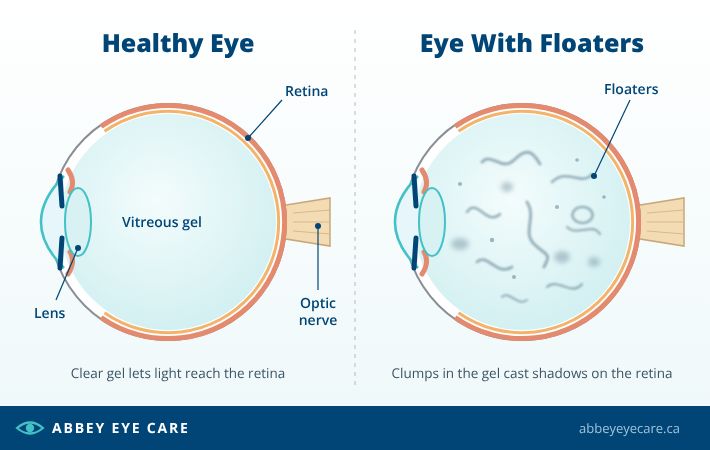
The inside of your eye is filled with a clear gel called the vitreous. It helps the eye keep its round shape. Over time, tiny clumps of protein and fibres form inside this gel. When light comes into your eye, those clumps cast small shadows on the retina, the light-sensing layer at the back of the eye. Those shadows are what you see as floaters.
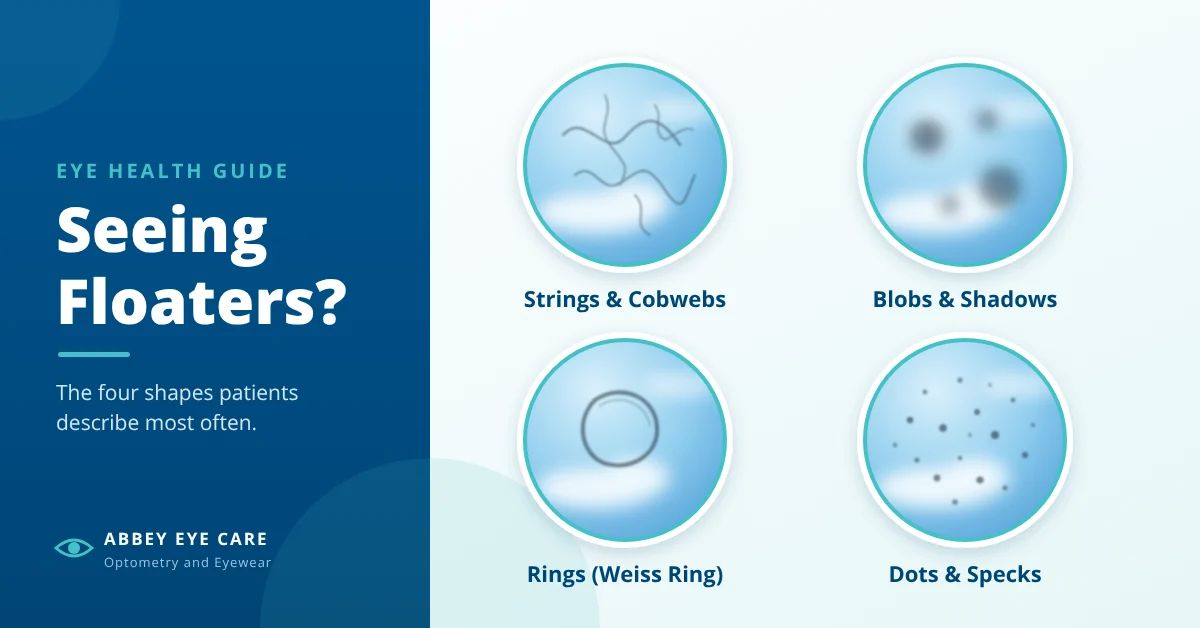
Because they’re suspended in gel, floaters move when your eyes move and then drift slowly after you stop. That’s why they seem to slip away whenever you try to look straight at them. They usually show up as one of a few familiar shapes.
Dots and specks
Small grey or dark spots, a bit like dust on a camera lens..
Threads and squiggles
Thin, wavy strands that curl and drift as your eyes move.
Cobwebs and rings
Larger, wispy shapes. A ring-shaped floater often appears after the gel shifts with age.
Why Floaters Become More Common With Age
Some floaters have been with you since before you were born. Most new ones, though, come from normal aging. As we get older, the vitreous gel slowly becomes more watery and starts to shrink.
Eventually it can pull away from the retina altogether. This is called a posterior vitreous detachment, or PVD. It’s very common, usually harmless, and often brings a sudden new floater or two. People who are nearsighted, or who’ve had eye surgery or an eye injury, tend to notice these changes earlier.
“Floaters that have been around for years are rarely a worry. A sudden change is what deserves a closer look.”
When Floaters Need Prompt Attention
Most of the time, floaters are simply a nuisance. Occasionally, though, the shrinking gel tugs hard enough on the retina to cause a tear. A retinal tear can lead to a retinal detachment, which threatens your sight and needs treatment quickly. Call us the same day if you notice any of these:
- A sudden burst or “shower” of new floaters
- Flashes of light, like a camera flash or lightning streak at the edge of your vision
- A dark shadow or curtain creeping in from the side, top or bottom of your vision
- Blurry or reduced vision that comes on suddenly
- New floaters after a blow to the head or eye
These symptoms aren’t something to wait out until your next routine visit. Our team sets aside time for urgent and emergency eye care, so please phone us at 905.847.3937 and we’ll try and see you quickly.
What to Expect When You Come In

To check on floaters, your optometrist needs a clear view of the vitreous and the whole retina, including the far edges. That usually means dilating drops, which widen your pupils for a few hours. Plan on blurry close-up vision and some light sensitivity afterward, and bring sunglasses.
With your pupils dilated, we look closely for any tears or thin spots in the retina. If you’ve noticed new floaters, booking an eye exam in Oakville with our team gives you a clear answer, and in most cases real peace of mind.
FAQ’s
Will my floaters ever go away?
They often fade or settle out of your line of sight over a few weeks to months. Your brain also gets better at tuning them out. Many people find that a floater that bothered them at first barely registers later on.
Can floaters be treated?
Most floaters don’t need any treatment. For the rare floater that seriously interferes with daily vision, there are surgical and laser options, and we can refer you to a retina specialist to talk through the benefits and risks.
I’ve had the same floaters for years. Should I worry?
Long-standing floaters that haven’t changed are usually harmless. Mention them at your regular eye exam so we can keep an eye on things. What matters most is a sudden change in number, size or shape, especially with flashes.
When should I see an eye doctor in Oakville about floaters?
Right away if they come on suddenly or arrive with flashes or a shadow in your vision. Otherwise, any new floater is a good reason to book a visit with an eye doctor in Oakville sooner rather than later, especially if you’re over 50 or nearsighted.
Floaters are part of life for most of us, and the vast majority are nothing more than a small annoyance. If something about your vision has changed, though, we’d rather take a look than have you wonder. At Abbey Eye Care, your vision and eye health are our top priority. We’d love to see you.