How MacuMira Works: Microcurrent Technology for Dry AMD
Dr. Jeff Goodhew
April 19, 2026
A New Hope for People Living with Dry Macular Degeneration
If you or someone you love has been diagnosed with dry age related macular degeneration (dry AMD), you know how frustrating it can be. Reading the fine print off a menu, recognizing a loved ones face across the room, or even seeing road signs clearly can feel like they’re slipping away over time. For many years, options for dry AMD focused on monitoring the condition and supporting eye health through things like nutrition and supplements. But now there’s something new on the horizon, MacuMira and at our Oakville clinic, patients are asking: “how does it work?”
A Gentle, Non-Invasive Treatment You Can Feel Comfortable With
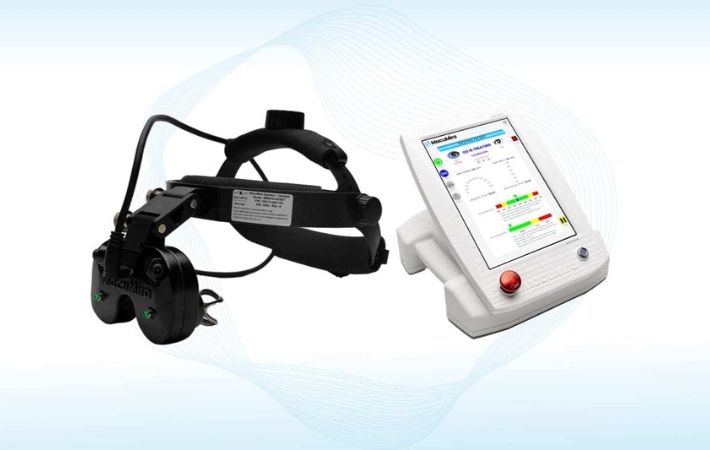
First, let’s talk about what MacuMira is and what it isn’t. It’s not surgery. There are no injections, no needles, and no long recovery times. Instead, MacuMira uses a very mild form of electrical stimulation called microcurrent therapy. Tiny amounts of current are delivered through soft eye cups placed over your closed eyelids during a treatment session.
Many patients describe the feeling as relaxing — some even drift off to sleep during the 32-minute treatment session. And because it’s so gentle, you can go about your day right after leaving our clinic.
So What Is Microcurrent — and How Does It Help the Macula?
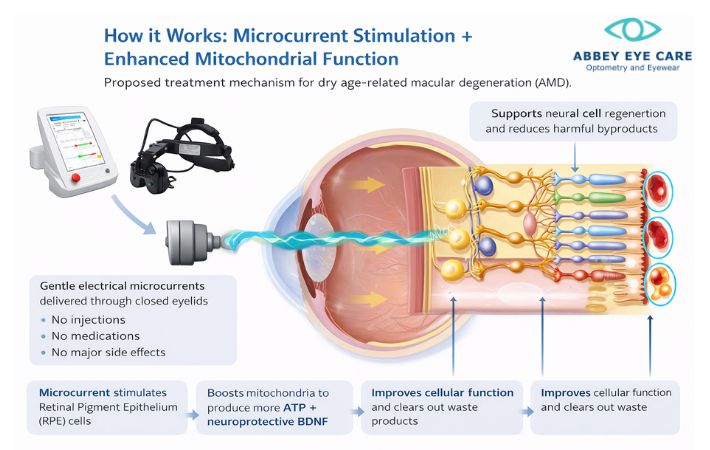
At its core, MacuMira works by delivering a small electrical signal to the retina, the part of the back of the eye that senses light and sends visual signals to your brain. With dry AMD, the cells in the macula, the part of the retina responsible for sharp central vision, slowly weaken and break down over time. This is why tasks like reading, driving, or seeing faces become more difficult.
Microcurrent stimulation through the closed eyelids is thought to help in a few key ways:
- Supports retinal cell activity. The gentle electrical signal may help the remaining healthy cells in the macula work better.
- Encourages healthier cell function. Early research suggests microcurrent can enhance blood flow and cell metabolism in the retina, giving struggling cells a boost.
- Improves visual performance. In the clinical study published in the International Journal of Retina and Vitreous, patients who received MacuMira treatment showed notable improvements in their ability to read letters on an eye chart and in contrast sensitivity — the ability to distinguish between light and dark. In fact, patients in the treatment group gained significantly more letters on the eye chart than those who did not receive the active electrical stimulation.
- It’s important to understand that this treatment is not a cure for dry AMD because at the moment there isn’t one. But many patients report real improvements in how they see and function visually in the world around them, especially within the first few weeks after beginning therapy.
What Can You Expect From a MacuMira Treatment Plan?
Here’s what most patients experience when starting treatment with MacuMira:
- Initial phase: A series of treatments (4 sessions over 10 days) to encourage visual gains.
- Noticeable improvement: Many people begin to notice sharper vision or better contrast — like seeing in dim light or reading more comfortably — after the 4th treatment session.
- Follow-up care: To help maintain these benefits, follow-up treatments are recommended approximately every 3 months based on your Optometrists guidance and current clinical guidance.
Most importantly, treatments happen right here in our Oakville office, and they are designed to fit into your life not take over it.
Is MacuMira Right for You?
If you’ve been living with dry AMD and feel like you’re losing more of your vision than you’d like, MacuMira offers a real evidence-based option to do more than just watch and wait. It’s a safe, non-invasive, and according to early clinical research, can deliver meaningful improvements in visual function for many patients.
We’re proud to offer this innovative technology at Abbey Eye Care in Oakville, and we’d be honored to guide you or your loved one through the process and to see whether it’s a good fit for your vision goals. If you’re in Oakville or the surrounding Halton area and would like to explore MacuMira please don’t hesitate to reach out to us.
— The Team at Abbey Eye Care

FAQ’s
Is MacuMira covered by OHIP or insurance?
The MacuMira treatment is not covered by OHIP; however some third-party insurance plans can offer some coverage. Our team to provide you with a letter that you can send to your insurance company to help advocate for coverage.
How much does it cost?
The cost will depend on your particular situation. Our team will be able to provide you with a more detailed cost of the treatments after your MacuMira consultation. Book a MacuMira assessment.
How many sessions will I need?
The standard protocol at the beginning is to have four sessions in the first ten days. Most patients will then need a maintenance session once every three months.
Does it hurt?
The MacuMira treatment session is actually quite comfortable. Most patients will feel a light tingling in the area around the eyes but it is certainly not painful. Many patients have fallen asleep during the treatment session and find it quite tolerable.
Can MacuMira cure dry AMD?
MacuMira is not a cure for macular degeneration. It is the only Health Canada indicatated treatment for patients suffering from dry macular degeneration. Clinical studies have shown many patients experience significant improvement in their quality of vision, such as contrast enhancement, colors being brighter and better overall vision for day-to-day life.
How soon will I see results?
This will vary from patient to patient but many people notice an improvement during the 10-day loading phase at the beginning.
Can I use it with my AREDS supplements?
Yes, we encourage patients to continue taking their vitamins that support their retinal health before, during, and after the treatments.